English
 The monopoly years
Pollurinn in Skutulsfjörður is the country's best natural harbour. The spit in Skutulsfjörður was therefore a choice trading location in past centuries. Dried fish and cod liver oil was the Icelanders' main export after 1400 and these products attracted foreign merchants to the country.
The Danish crown leveraged competition between merchants by issuing trading licences for a fee. In 1602 it was decided that only Danish merchants could trade with Icelanders. This was the inception of the Danish Crown's trading monopoly which lasted until the year 1787.
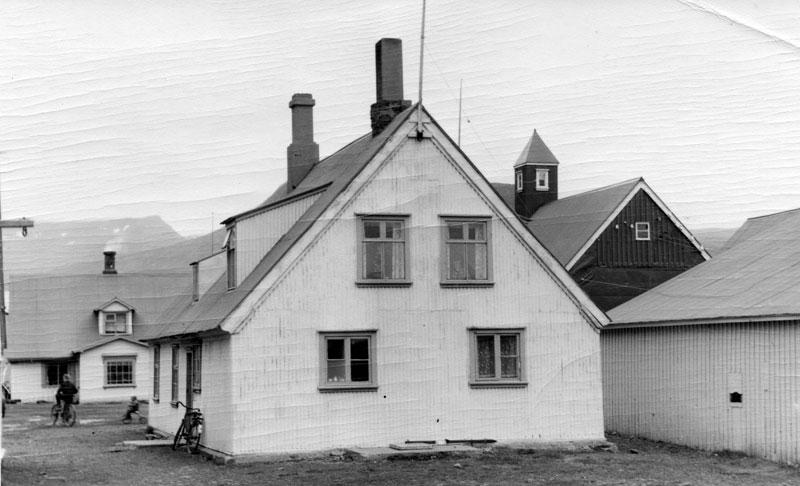
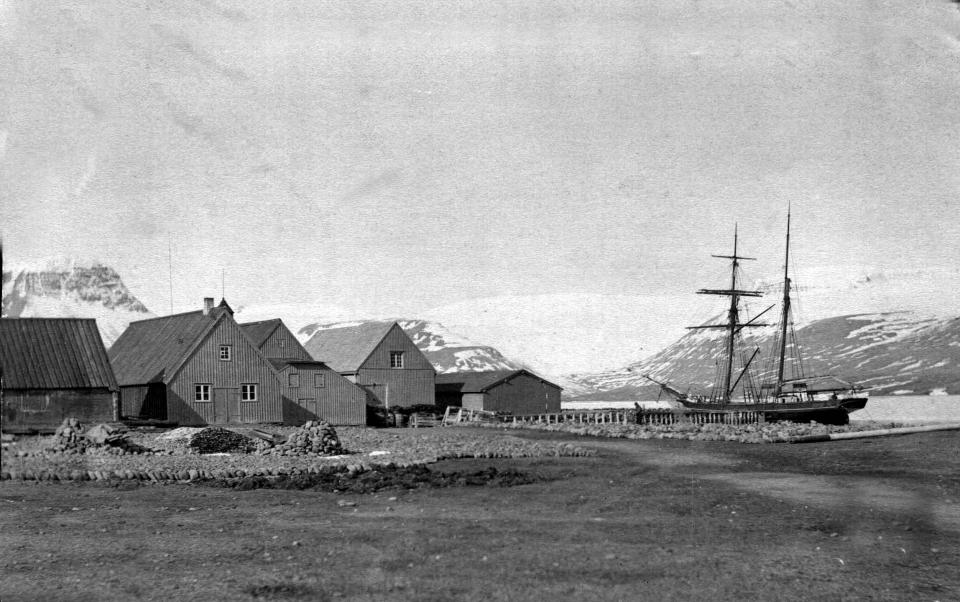
Merchants were then allocated a monopoly for specific trading stations. In the West Fjords these trading stations were in Reykjafjörður in Árneshreppur, in Skutulsfjörður, which was later called Ísafjörður, at Þingeyri in Dýrafjörður and at Patreksfjörður. It was forbidden to trade at other locations and there was a total ban on trading with other nations. During the monopoly, trading posts were constructed at Suðurtangi and today at that location there remains the oldest group of buildings in Iceland, four timber buildings dating back to the period 1757-1784. The trade monopoly was lifted in 1987 and six trading towns were established around the country. Ísafjörður was one of them.
Detail
In 1787 it was decided to lift the Danish Crown's trade monopoly in Iceland and to give Danish citizens the opportunity of trading with the country. At the same time six trading towns were established around the country where merchants and tradesmen could settle and trade. Once again, the Danish authorities endeavoured to encourage innovation and development in the Icelandic community and hoped that the trading towns would be centres for commerce, fishing and industry One of these trading towns was Ísafjörður.
The plot of land for the Ísafjörður trading centre was mapped out below the priest's residence at Eyri in Skutulsfjörður. Immediately in the summer of 1788, merchants from Bergen in Norway arrived, hoping to take advantage of the new trading arrangements in Iceland. They set up premises at the highest point of the trading centre plot, just below the priest's outhouses. It was later called Hæstikaupstaður (highest trading centre). The shop manager's house, built in 1788, still stands on this plot of land, newly renovated. At Suðurtangi, on the lowest point on the spit, there was the old monopoly shop which was later called Neðstikaupstaður, or í Neðsta (lowest trading centre). The premises at Suðurtangi were sold to merchants from Altona in Holtsetaland, or Holstein, which was then part of Denmark. It was not long before merchants from Sönderborg in Denmark joined the group and were allocated plots between Neðsti and Hæsti, which was subsequently called Miðkaupstaður (middle trading centre). This free trade thus brought competition to the Ísafjörður trading area. This had been unknown for two and a half centuries while monopoly reigned.
Myndir með Ítarefni