English
 Trading in the 19th century: Freedom and progress
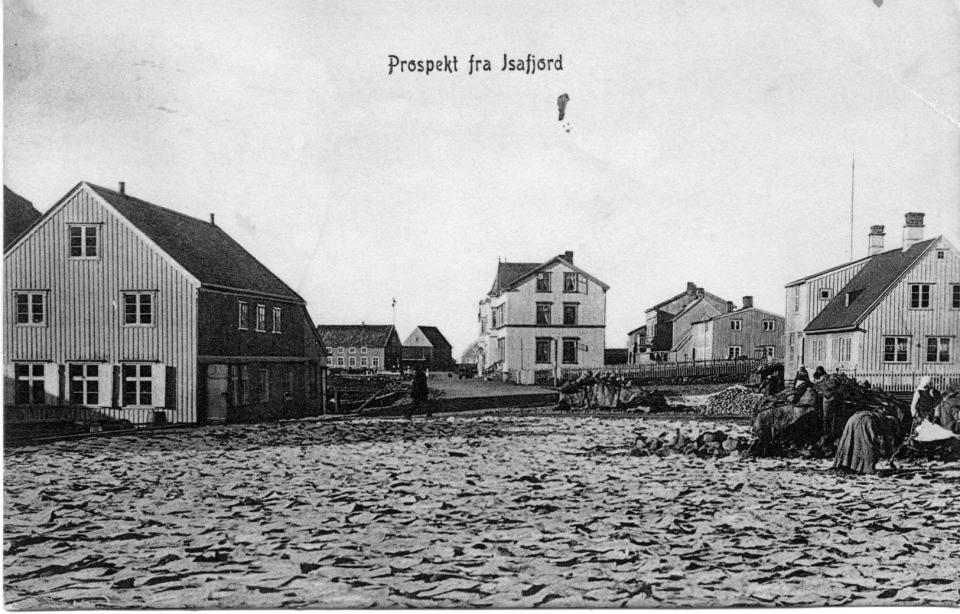
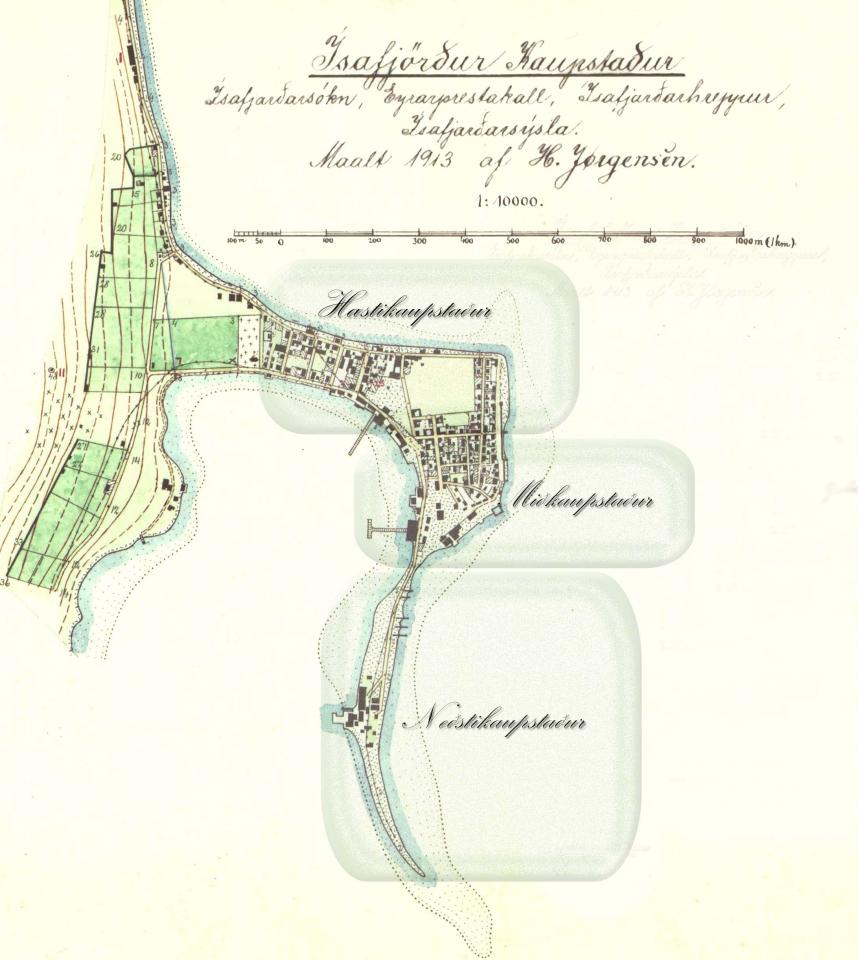
Increased free trade and competition in the 19th century proved extremely beneficial for the inhabitants in the Ísafjörður trading area. With the advent of schooners, improved trading conditions and an increase in exports of shark liver oil and salt fish, Ísafjörður became one of the country's main trading centres. Ísafjörður trading centre was a centre for fishing, commerce and administration in the county, and had direct sailing routes to Copenhagen and to other European cities. Salt fish was the most valuable export commodity from the West Fjords in the 19th century though for a certain period shark liver oil was equally important. Ásgeirsverslun was by far the largest company in the West Fjords prior to and around1900, both in commerce and fishing operations, but large mercantile companies were also operated at Hæstakaupstaður and Miðkaupstaður.
Detail
Ásgeirsverslun was the largest employer in Ísafjörður during the period 1880 until 1918. The merchant company operated deck ships, salt fish processing, import and export, workshops, shops and bakeries. Ásgeir Ásgeirsson the older steered the company with a strong, secure hand. Three to four schooners were are operated for shark and cod fishing and a large brigantine, the S. Louise, was used to transport salt fish cargo to the Mediterranean countries and to carry other goods back to Iceland. When the exporting business and commerce increased, Ásgeir moved his home to Copenhagen and ran the company from there. When he died in 1877 his son, Ásgeir G. Ásgeirsson, or Ásgeir the younger took over and the wheels began to turn more rapidly.
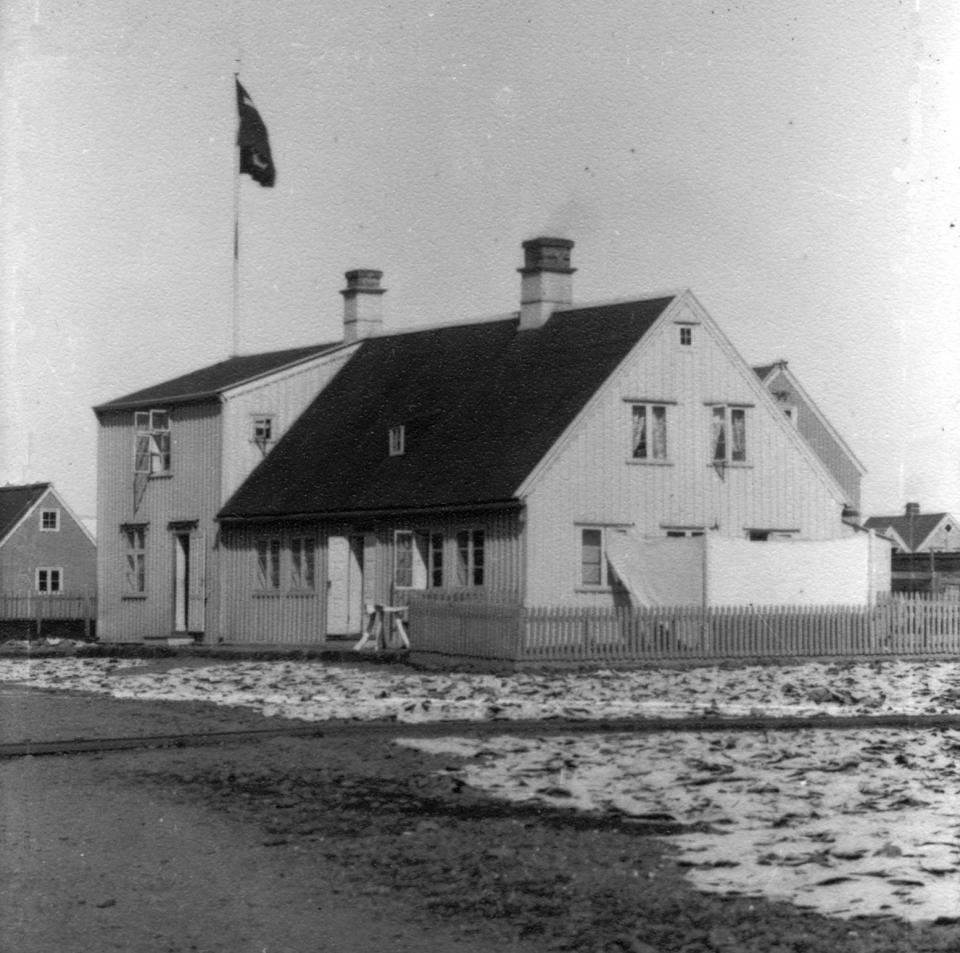
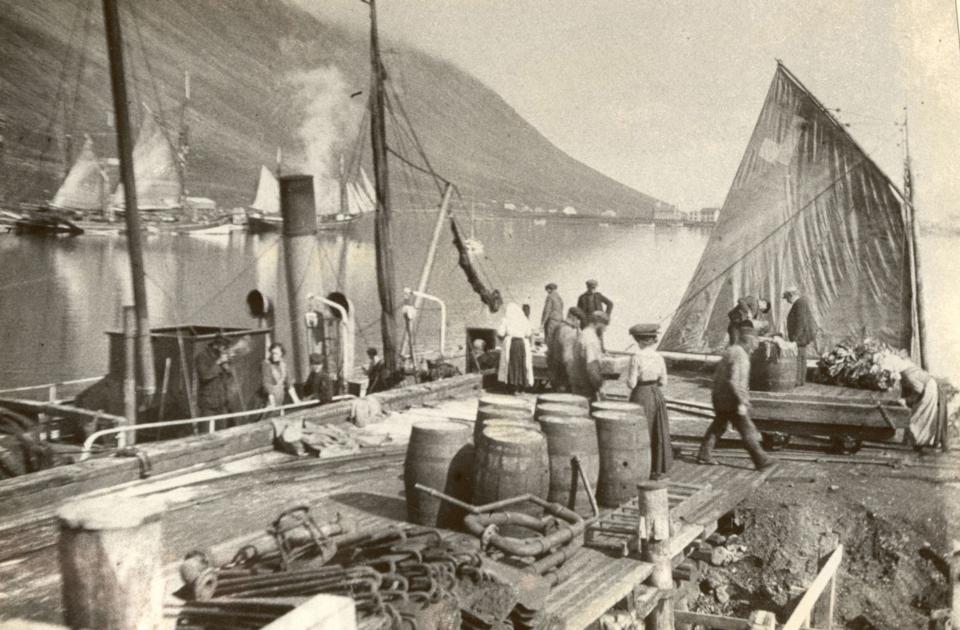
The company's premises were initially located within the Miðkaupstaður area but in 1883 Ásgeirsverslun purchased Neðstakaupstaður. With this addition the company gained a much larger yard for drying salt fish, fish warehouses and a jetty for ocean-going ships which was soon extended. This was the start of the company's empire era. For a time it was the largest commercial enterprise in the country. In addition to its commercial premises in Ísafjörður, Ásgeirsverslun established many branches for landing fish catches, for selling salt and as sales outlets. In this way the company succeeded in collecting fish from fishermen who plied rowing boats, throughout the whole trading area. A small steamship called Ásgeir litli (little Ásgeir), was used to facilitate transport of goods and people between branches. Another steamship, Á. Ásgeirsson (big Ásgeir) was bought by the merchants in 1893 for transport of cargo between Iceland and European countries. The ship was 849 tonnes. This was the first steamship owned by Icelanders to work international routes. One of the innovations introduced by Ásgeirsverslun was to lay railway track from the jetty for ocean-going ships at Neðsta, through Turnhúsið, out to the salt fish yards, from there to all the warehouses and then all the way up to Miðkaupstaður. A telephone cable was laid from the factor's house at Neðsta, then occupied by the store manager Árni Jónsson, to the main offices on Aðalstræti. This was the first telephone to be installed in this country.
Myndir með Ítarefni