English
 Rowing boats
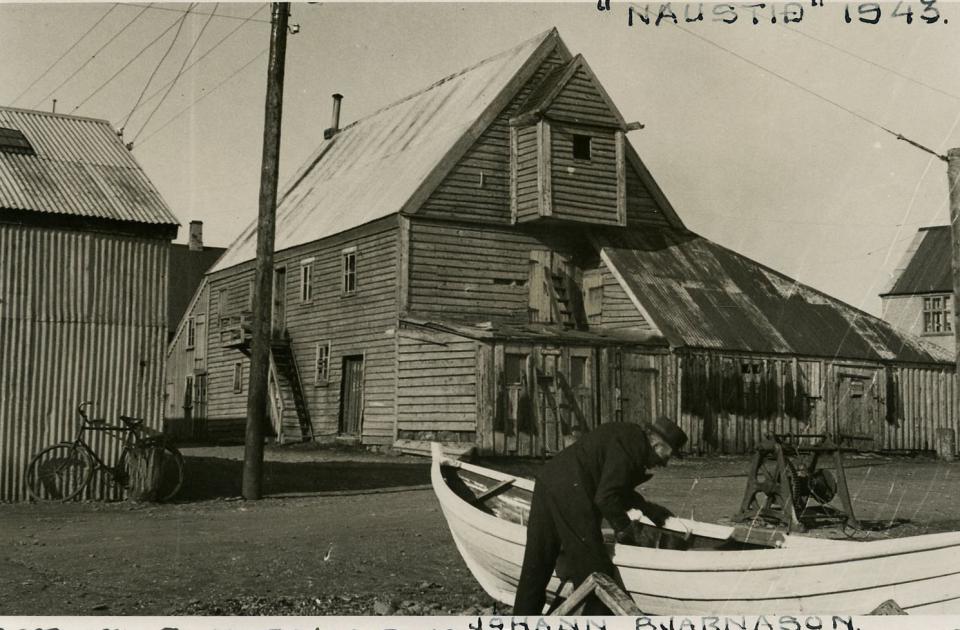
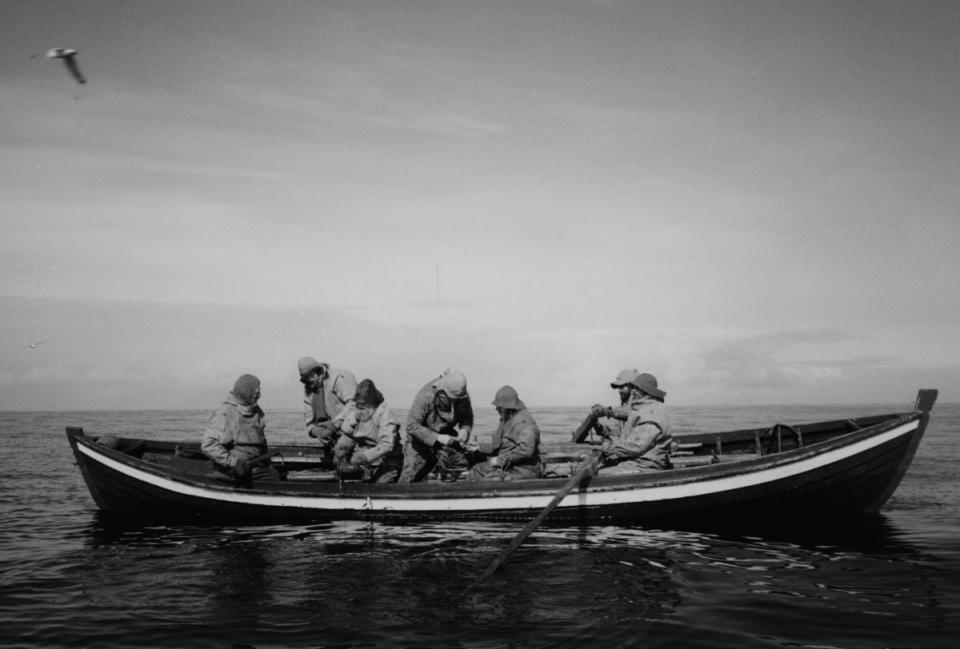
Among the West Fjords communities, fishing was the most important means of survival along with what could be gleaned from the cliffs, beaches and sea. The nature of the land and weather did not allow much livestock, just a few sheep and one or two cows on the better farms. Rowing boats were the main form of transport and they were used to fish the seas. Fishing was done from almost every farm, at least spring and autumn, and it was vital for each and every farmer to own a good boat.
Fishing stations were located where fishing grounds were close at hand and which had good landing facilities. Fishing stations were often on promontories within easy reach of fertile fishing grounds. Farmers and their workers came to the fishing stations late in the autumn and stayed there for the duration of the season which usually lasted to Advent, when the men normally returned home. In the New Year they returned for the winter season and fished the seas until the closing day on 11 May. The tackle was usually a hand line with hook and sinker. Long lines were later introduced, with many hooks, which were paid out with sinkers and floats and left in the sea for some time before being drawn in by hand. Some farmers with bigger farms around Ísafjarðardjúp would operate their boats from Bolungarvík for most of the year and would man them with tenant farmers and labourers.
Detail
In the old days the catch was dried in stone constructions while in more recent centuries it was flattened out and salted for export. Catfish, small cod and other insignificant catch could be dried or salted by the fish station workers themselves for their own use. The best fish was deposited with the merchants in return for purchase of necessities such as corn, coffee and fishing tackle. Fisheries gave a good profit when the catch was good.
Workers at the fishing station lived in fishermen's huts. There were often two men to a bed. Each man brought his own food in a box, dried fish, meat and fat, lard and butter. It was not customary to take food on fishing trips, only whey to drink. A fishing trip could take anything from 8 to 16 hours, depending on whether they were fishing in shallow or deep waters.
Shark fishing was an important part of fisheries in the first half of the 19th century. At that time, oil processed from shark liver was the country's most valuable export. Shark fishing was practised using the largest rowing boats, six-oar boats and larger, and subsequently with deck ships. Fishing trips could take a number of days. The liver was boiled and the oil used to fuel street lamps in the cities of Europe.
Myndir með Ítarefni