English
 Ice-houses
Those who operated rowing boats and subsequently motorboats would always be searching for ways to increase productivity with innovations in tackle and boats. Experience showed that new and fresh bait was the single best method to increase catches By cooling or freezing bait for an extended period of time it was possible to reduce downtime needed for gathering bait, and this could increase the catch. The first ice-houses were constructed with thick turf walls to maintain a low temperature inside. They had compartments made with partition walls which were filled with a mixture of ice and salt which maintained a low temperature for a long period of time. It was possible to construct such ice-houses at each fishing station, with a joint effort or at the initiative of the main fisheries operators who could then rent space in these buildings or sell bait to other fishery operators. The most common bait was herring
Detail
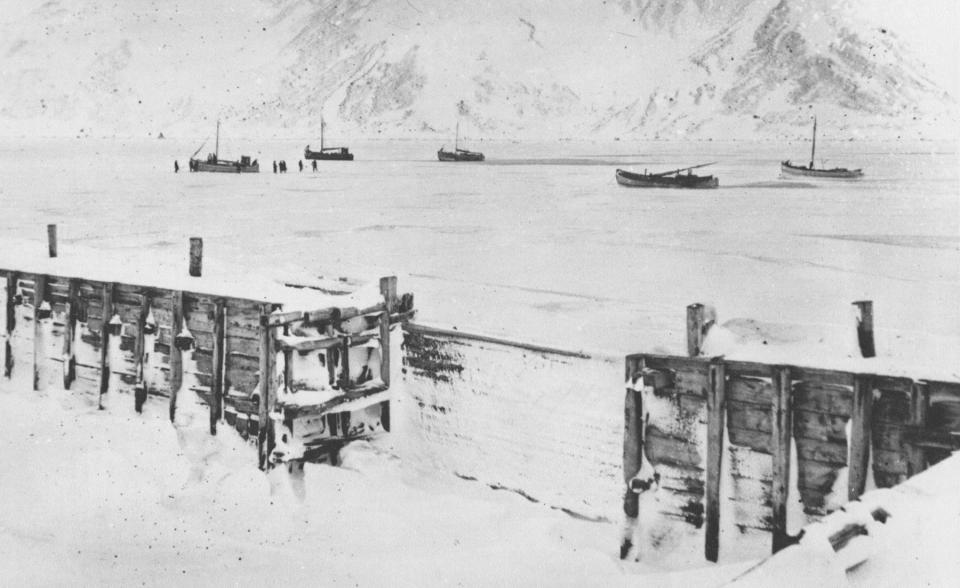
The first ice-house in the West Fjords was built by Ásgeirsverslun at Neðstakaupstaður in the West Fjords in 1896. The ice was taken in the Pollurinn harbour in the winter and brought to the building by sledge. Mechanical freezing was introduced by a company that operated ice-houses, Íshúsfélag Bolungarvíkur, in the year 1928 and in the following years such machinery was also installed for many ice-houses in Ísafjörður, Súðavík and at other locations. Many of the ice-houses were thus converted to freezing plants and began to quick freeze fish.
Myndir með Ítarefni